The pH Secret Behind HOCl
If you’re comparing hypochlorous acid products, you may notice that some brands focus heavily on their ppm.
But there is another number that deserves just as much attention:
pH.
Why?
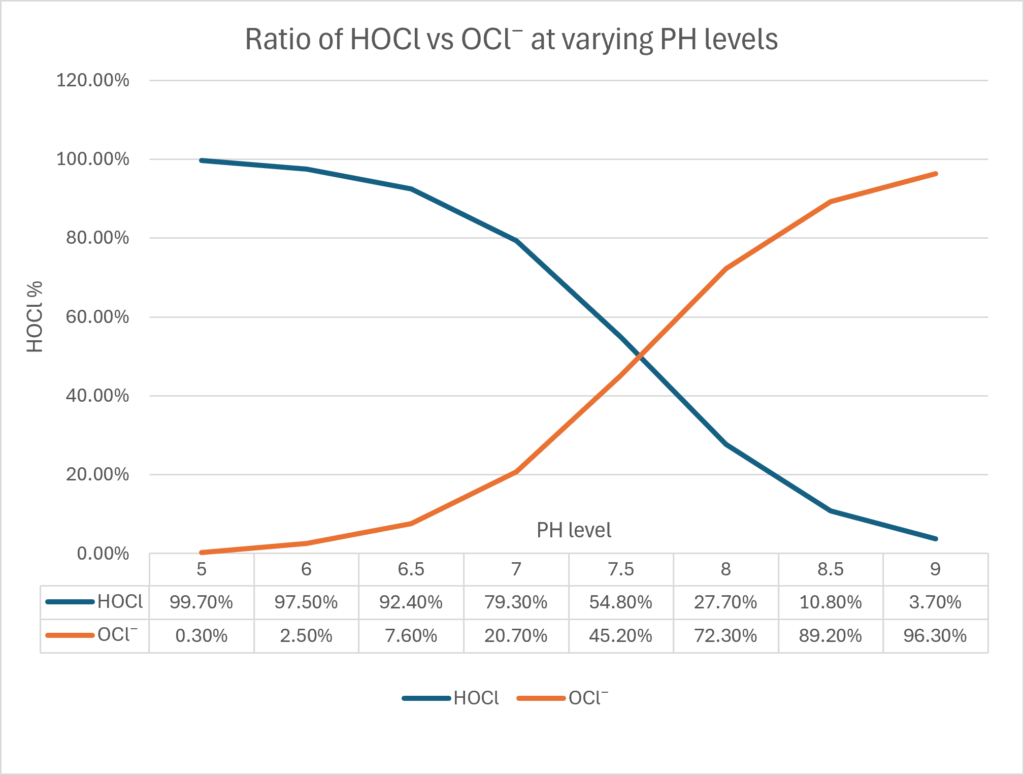
Hypochlorous acid can exist in different chemical forms in water. The balance between active HOCl and hypochlorite (OCl⁻) changes according to the pH of the solution.
The active HOCl molecule is the form most strongly associated with antimicrobial activity. It is electrically neutral, allowing it to penetrate microbial cell membranes more readily than the charged hypochlorite ion.
As pH moves away from the desired range, the balance can shift and the solution can become less effective.
That’s why stability matters
A bottle can start its life with an impressive ppm reading.
But what matters is whether the formulation can maintain the chemistry that makes that ppm useful.
Over time, heat, light, air exposure and other factors can affect HOCl stability. Research has shown that formulation stability and pH are important determinants of HOCl’s antimicrobial performance.
At SpraySafe, we focus on the whole formulation
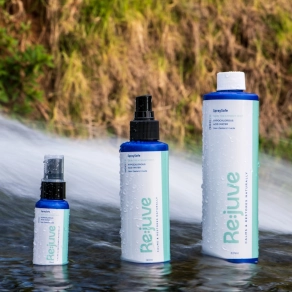
Re:juve HOCl is formulated at 70 ppm with a pH of 5–6.5.
Our manufacturing process is designed to maintain this balance, rather than simply chasing a higher ppm number.
Because the goal isn’t to put the biggest number on the bottle.
The goal is to keep the chemistry working. We have over 10 years experience producing stable, high-quality HOCl products.
FAQs about the PPM of Hypochlorous Acid
Why is pH important in hypochlorous acid products?
pH affects the balance between hypochlorous acid (HOCl) and hypochlorite (OCl⁻) in a solution. Because HOCl is the form most strongly associated with antimicrobial activity, maintaining an appropriate pH is an important consideration when formulating an HOCl product.
What is the ideal pH for a hypochlorous acid skin spray?
The appropriate pH depends on the formulation and its intended use. Re is formulated with a pH of 5–6.5 and 70 ppm HOCl, with a focus on balancing formulation performance and everyday skincare use. Ppm and pH should be considered together rather than relying on either measurement alone.
Can hypochlorous acid lose its effectiveness over time?
HOCl can degrade over time, and its stability can be affected by factors such as temperature, light exposure, formulation and storage conditions. A product’s initial concentration doesn’t necessarily tell you how well it will maintain its intended chemistry throughout its shelf life. Formulation stability and appropriate testing are therefore important considerations.
Does a higher ppm mean a better hypochlorous acid spray?
Not necessarily. Ppm indicates the concentration of available chlorine, but it doesn’t reveal the full chemical balance of the solution or how stable the formulation is over time. The pH, proportion of chlorine present as HOCl and the product’s demonstrated performance all contribute to a more complete assessment.
How should I store a hypochlorous acid skin spray?
Follow the manufacturer’s storage instructions. In general, protecting HOCl products from excessive heat and direct sunlight can help preserve their stability. Keep the bottle properly closed when not in use and observe the product’s stated shelf life and expiry guidance.
Learn More About Hypochlorous Acid Chemistry
- Is Higher ppm Hypochlorous Acid Better? Not Necessarily.
- Why Does Hypochlorous Acid Become Less Effective Over Time?
- Why Is Re:juve 70 ppm When Some HOCl Products Are Much Higher?